Antimalarial Stockouts Shift Prescribing to Subcurative Doses in Rural Malawi
In rural Malawi, a quiet but dangerous shift is taking place in the treatment of malaria. When the first-line artemisinin-based combination therapy (ACT) runs out—and it often does—health workers turn to older drugs like sulfadoxine-pyrimethamine (SP) or amodiaquine, often as monotherapy or in incomplete doses. The consequences may be invisible for now, but the risk of accelerating resistance to the last fully effective antimalarials is real. This is not a hypothetical scenario; it is a recurring reality in clinics across the country.
When the Pharmacy Shelf Stays Empty
Artemether-lumefantrine (AL) is the standard first-line treatment for uncomplicated Plasmodium falciparum malaria in Malawi, as recommended by the World Health Organization (WHO). Yet stockouts of AL lasting two to four weeks are common in rural health facilities. A 2025 Ministry of Health survey found that roughly one in five clinics experienced an AL stockout in the preceding three months. During these gaps, health workers must decide: send patients home untreated or dispense whatever is on hand.
The most common substitute is SP, a drug that Malawi used as first-line until 2007, when rising failure rates forced a switch. SP is cheap, widely available, and familiar. But it is also a monotherapy for falciparum malaria, and monotherapy is precisely what the WHO warns against. A single course of SP may clear symptoms temporarily but often fails to clear gametocytes—the sexual stage of the parasite that transmits to mosquitoes. This means the patient feels better but remains infectious.
Subcurative dosing is the term for any regimen that suppresses parasitemia without eradicating it. In practice, this includes half-courses of AL, single doses of SP, or a few tablets of amodiaquine. These regimens reduce fever and may prevent severe disease in the short term, but they also expose the parasite population to drug levels that are high enough to select for resistant mutants but not high enough to kill them. This is the classic recipe for resistance selection.
The WHO Global Malaria Programme has repeatedly advised against any non-ACT monotherapy for confirmed malaria. Yet in Malawi, the choice is not between ACT and SP; it is between SP and nothing. As one district health officer put it, "We cannot watch children die while we wait for supplies." That sentiment is understandable, but it carries epidemiological consequences that extend beyond the individual patient.
Machinga District: A Case in Point
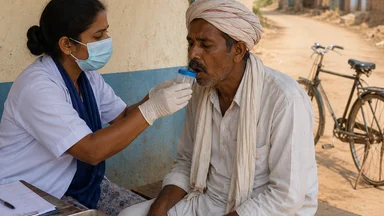
Machinga District Hospital, in southern Malawi, ran out of AL for 18 days in March 2026. During that period, the hospital pharmacy dispensed SP as monotherapy to patients with confirmed malaria. Rapid diagnostic tests (RDTs) remained available, so diagnosis was not the bottleneck. The shortage was purely a supply chain failure.
According to the district health officer, the stockout resulted from delays at the central medical stores in Lilongwe. A truck carrying AL had broken down, and a replacement took nearly three weeks to arrive. In the interim, the hospital treated roughly 120 patients with SP. Follow-up data are not yet available, but historical records from similar events suggest that around one in five patients treated with SP in East Africa experiences treatment failure within 28 days.
SP monotherapy has known failure rates above 20 percent in parts of East Africa, according to therapeutic efficacy studies conducted between 2020 and 2024. Malawi's own surveillance, done every two years, has not yet captured a signal of rising failure in Machinga, but the sample sizes are small and the intervals are long. By the time a failure trend is statistically significant, the resistant parasites may already be spreading.
The Machinga case is not isolated. In Nsanje district, community health workers ration remaining AL for severe cases—children under five with high fever or danger signs—and give half-dose SP to others. A 2025 survey by the Malawi Ministry of Health found that 12 percent of treated patients had recurrent parasitemia within 28 days, a figure that may reflect both recrudescence and reinfection. Without molecular genotyping, it is impossible to distinguish the two, but the rate is concerning.
The Evidence Gap Experts Disagree On
There is no randomized trial that directly compares stockout-driven subcurative dosing with rescue therapy—for obvious ethical reasons. You cannot randomize patients to receive inferior treatment when a proven alternative exists. But when the proven alternative is absent, the question becomes: Is subcurative dosing better than no treatment at all?
Some experts argue that partial treatment still prevents severe disease and death, especially in children under five, who bear the highest mortality. From a public health perspective, saving a life today may outweigh the theoretical risk of resistance tomorrow. This view is pragmatic and rooted in the reality of resource-limited settings.
Others warn that subcurative exposure is precisely how artemisinin resistance emerged in Southeast Asia. Modeling by Okell and colleagues, published in 2023, predicts that each year of widespread subcurative dosing could increase treatment failure rates by 5 to 10 percent, accelerating the timeline to partner drug resistance. If P. falciparum becomes resistant to both artemisinin and lumefantrine, the continent could face a malaria crisis not seen since chloroquine failed.
The WHO's position is clear: no non-ACT monotherapy for confirmed malaria. But the organization also acknowledges that in the absence of ACT, presumptive treatment with SP may be considered for children under five in high-transmission areas—a nuanced stance that reflects the tension between ideal and feasible. The evidence gap remains wide, and reasonable experts disagree on the balance of harms.
What Happens at the Village Clinic
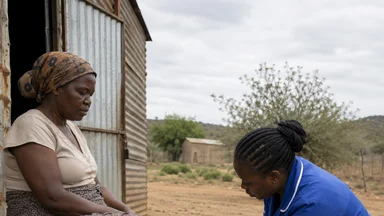
At the village level, the choices are made not by epidemiologists but by nurses and community health workers. They see febrile children every day. They know that AL works, but they also know that the supply is unreliable. When the pharmacy runs out, they improvise.
In Nsanje, community health workers keep a stock of SP for emergencies. They give a half-dose to a child with a positive RDT and a temperature of 39°C. The mother is told to come back if the fever does not resolve in three days. Often, it does. But within two to three weeks, the child may present again with fever. The cycle repeats.
This pattern increases gametocyte carriage. A study from neighboring Mozambique found that children treated with SP monotherapy had higher gametocyte densities on day 14 compared with those treated with ACT. Higher gametocyte density means higher transmission potential. In a village where mosquitoes breed in every puddle, that translates into more cases.
The 2025 Malawi Ministry of Health survey also found that 12 percent of treated patients had recurrent parasitemia within 28 days. While some of these are reinfections, the proportion is higher than the 5 percent typically seen with ACT. The difference may be small in absolute terms, but over millions of cases, it represents thousands of additional infectious individuals.
The Resistance Timeline Nobody Wants
Artemisinin partial resistance has already been confirmed in Rwanda and Uganda. In both countries, P. falciparum parasites carrying the kelch13 mutation show delayed clearance after artemisinin treatment. So far, partner drugs remain effective, but the clock is ticking.
Subcurative dosing in Malawi could create a new hotspot. If artemisinin resistance establishes a foothold here, and if partner drug resistance follows, ACT could fail across Southern Africa. The historical precedent is sobering: chloroquine resistance emerged in Southeast Asia in the 1950s and took roughly 20 years to reach Africa. Artemisinin resistance has already crossed the continent faster than expected.
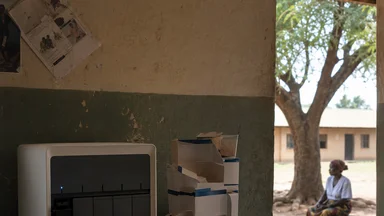
Current surveillance in Malawi relies on therapeutic efficacy studies conducted every two years at sentinel sites. These studies are underpowered to detect low-level resistance early. Molecular surveillance is done sporadically, often when funding allows. By the time a signal is confirmed, it may already be too late.
The WHO has called for enhanced surveillance and for countries to prepare for the possibility of ACT failure. But preparation requires stockpiles, alternative drugs, and robust supply chains—all of which are weak in Malawi. The country is not alone; similar patterns are seen in other parts of sub-Saharan Africa, where stockouts are a chronic problem.
The Economic and Human Cost of Inaction
The financial implications of subcurative dosing extend beyond the clinic. Each treatment failure requires a repeat visit, often with more severe symptoms, costing families lost wages and transport fares. A 2024 study in Malawi estimated that a single episode of malaria costs a household roughly US$ 5–10 in direct expenses and lost income—a significant burden where daily earnings are often below US$ 2. If subcurative dosing increases the recurrence rate by even 5 percentage points, the cumulative economic impact across a district like Machinga could be substantial.
Beyond economics, there is the human toll. Children who experience repeated malaria episodes are at higher risk of anemia, cognitive impairment, and school absenteeism. A longitudinal study in Kenya found that children with more than three malaria episodes in a year scored significantly lower on tests of attention and memory. Subcurative dosing, by allowing recrudescence, may contribute to this cycle of repeated illness.
Yet the counter-argument remains: in the absence of ACT, a half-dose of SP may be the difference between life and death. Severe malaria can kill within 24 hours, and the nearest referral facility may be hours away. For a mother carrying a febrile child, any treatment that brings down the fever is a relief. The question is whether the system can afford to let that relief come at the cost of future efficacy.
Trade-offs in Practice: A Closer Look at Decision-Making
The tension between immediate needs and long-term consequences is not merely theoretical; it plays out daily in clinics where the supply chain fails. Consider the case of a 20-bed health centre in Chiradzulu district. In October 2025, the centre experienced a 10-day AL stockout. During that period, the clinical officer on duty decided to prescribe half-courses of AL—three tablets instead of six for an adult—to stretch the remaining stock. His reasoning was that a partial dose might still clear the infection in some patients, and it was better than sending everyone home untreated. However, a subsequent audit found that 8 out of 15 patients who received the half-dose returned within 14 days with recurrent symptoms, compared with only 2 out of 20 patients who had received full-dose AL earlier in the month. While the numbers are small, they illustrate the pattern.
Another example comes from Balaka district, where a nurse midwife described using amodiaquine as a monotherapy when AL ran out. She administered a single dose of 600 mg to adults, despite the recommended regimen being a three-day course with artesunate. She noted that most patients improved initially, but several came back with fever within a week. She felt conflicted but saw no alternative. "If I don't give them something, they will go to the traditional healer, who might give them herbs that don't work at all," she said.
These examples highlight the difficult trade-offs that health workers face. On one hand, any antimalarial treatment—even if subcurative—may reduce the risk of severe disease and death in the short term. On the other hand, the repeated use of subcurative doses may accelerate resistance, undermining the effectiveness of ACT for everyone. The balance of harms depends on the frequency and duration of stockouts, the prevalence of resistance markers, and the availability of alternatives. In some settings, the risk of resistance may be low if stockouts are rare and brief. But in others, where stockouts are chronic and widespread, the cumulative effect could be significant.
Modelling studies have attempted to quantify this trade-off. A 2024 simulation by researchers at the University of Oxford suggested that if subcurative dosing occurs in more than 10 percent of treated cases for two consecutive years, the probability of artemisinin resistance emerging increases by roughly 15–20 percent above baseline. However, the same model showed that if subcurative dosing is limited to less than 5 percent of cases, the additional risk is minimal. This suggests that the frequency of stockouts is a critical factor. In districts like Machinga, where stockouts happen several times a year, the risk may be substantial.
Another dimension is the role of community health workers versus facility-based staff. Community health workers often operate with less supervision and may be more likely to dispense incomplete courses. A 2025 qualitative study in Malawi found that some community health workers believed that a single dose of SP was sufficient because it had worked in the past. Training and supervision are essential to ensure that even in crisis situations, the best available option is used.
Despite these challenges, there are reasons for cautious optimism. The Malawi Ministry of Health, in collaboration with partners such as the President's Malaria Initiative, has been working to strengthen the supply chain. Efforts include improved forecasting, buffer stocks at district level, and use of mobile technology for real-time stock monitoring. In some districts, these measures have reduced the frequency of stockouts by 30–40 percent. However, progress is uneven, and funding gaps remain.
For prescribers on the ground, the most important step is to communicate clearly with patients and their families. If a subcurative dose is given, the patient should be advised to return immediately if symptoms persist or worsen. They should also be told that the treatment may not cure the infection completely and that they should seek a full course of ACT as soon as it becomes available. This transparency can help manage expectations and reduce the risk of repeated partial treatment.
Practical Steps for Prescribers Now
While the debate over evidence continues, prescribers in rural Malawi need actionable guidance. The following steps are based on current WHO recommendations and expert consensus.
- Use RDT-confirmed diagnosis before any antimalarial prescription. This reduces unnecessary drug pressure and helps conserve stock.
- If ACT is unavailable, consider referral to a facility that has stock. For severe cases, referral is mandatory.
- Avoid dispensing SP or amodiaquine as monotherapy for confirmed malaria. If ACT is absent, a single dose of SP may be given as a holding measure, but the patient should be advised to seek ACT as soon as possible.
- Report stockouts through the District Health Information System (DHIS2). Timely reporting helps trigger resupply.
- Document treatment failures and send blood slides for molecular testing. This contributes to surveillance and informs policy.
These steps are not a substitute for a reliable supply chain. They are a bridge until the system functions as intended. For a deeper look at how supply shortages affect chronic disease care, see our article on diabetes remission protocols in rural Kenya.
The problem of stockouts is not unique to malaria. In other parts of Africa, similar shortages affect tuberculosis diagnostics, as we reported in TB diagnosis delays in rural Uganda. The common thread is a fragile supply chain that breaks under the weight of demand.
This article is for informational purposes only and does not constitute personalized medical advice. Clinicians should follow local guidelines and consult with infectious disease specialists when managing complex cases.