Tuberculosis Drug Susceptibility Testing Waits Six Weeks in Rural India
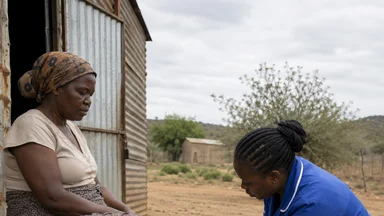
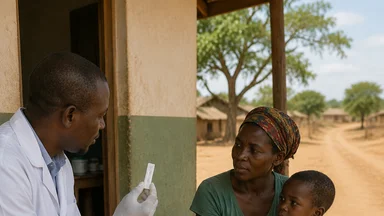
When a farmer in rural Uttar Pradesh develops a persistent cough, the path to a tuberculosis diagnosis is rarely straightforward. A sputum sample collected at a primary health centre may travel to a district lab, then to a reference laboratory hundreds of kilometres away. If the bacteria turn out to be drug-resistant, the patient might not learn this for six weeks. By then, they may have stopped treatment, infected family members, or developed resistance to additional drugs.
This six-week gap between diagnosis and drug susceptibility testing (DST) is a critical weakness in India's tuberculosis control efforts. While the country has made impressive strides in case detection, the slow pace of DST in rural areas undermines treatment success and perpetuates the spread of multi-drug resistant TB (MDR-TB). The problem is not a lack of technology or guidelines—it is a failure of implementation.
The Six-Week Gap Between Diagnosis and Treatment
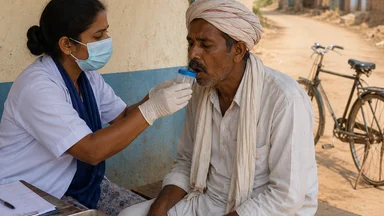
In India's public health system, the standard diagnostic pathway for TB begins with smear microscopy at a local clinic. If acid-fast bacilli are detected, the sample is sent to a district-level laboratory for Xpert MTB/RIF testing, which can detect resistance to rifampicin—the most important first-line drug—within hours. But this is only the first step.
For patients whose samples show rifampicin resistance, or for those at high risk of MDR-TB, a full DST requires culture-based methods. The bacteria must be grown on solid or liquid media, a process that takes at least four to six weeks. During this time, the patient is often started on a standard first-line regimen, which may be ineffective if they harbour resistant strains. The delay means that appropriate treatment begins only after the resistance profile is known, by which point the disease may have progressed.
The consequences are measurable. A 2023 study in The Lancet Global Health estimated that each week of delayed DST increases the risk of transmission by roughly 5–10%. In rural areas, where patients often travel long distances for care, the loss to follow-up during this waiting period can exceed 30%. Many patients simply do not return for their results.
Beyond the individual patient, the delay imposes a burden on the entire health system. When a patient is lost to follow-up, the resources spent on initial diagnostics and sample transport are wasted. The programme may never know whether that patient eventually received treatment elsewhere or died at home. This information gap makes it difficult to accurately measure the true burden of drug-resistant TB in rural communities.
How India's TB Programme Tries to Shorten the Wait
India's National Tuberculosis Elimination Programme (NTEP) has invested heavily in molecular diagnostics. As of early 2024, more than 1,400 GeneXpert machines were deployed across the country, and the government aims to make Xpert the initial diagnostic for all presumptive TB cases. The cartridge-based test can detect Mycobacterium tuberculosis and rifampicin resistance in under two hours.
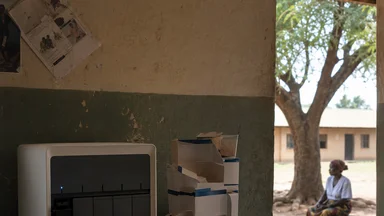
Yet this technology has not eliminated the bottleneck. Xpert machines are concentrated in district hospitals and medical colleges, leaving many sub-district clinics without access. Samples must be transported, often by bus or courier, and the cold chain is not always maintained. A 2022 evaluation by the National Institute of Research in Tuberculosis found that sample transport times in rural areas averaged three to five days, with some samples taking over a week.
Furthermore, Xpert only covers rifampicin resistance. For second-line drugs, such as fluoroquinolones and injectable agents, culture-based DST remains the standard. The NTEP has introduced line probe assays (LPA) that can detect resistance to isoniazid and second-line drugs within one to two days, but these are available only at reference labs. In practice, many patients never receive LPA testing because the samples do not reach the lab in time, or because the lab lacks the necessary reagents.
Private labs, which handle an estimated 50% of TB cases in India, often operate outside the NTEP framework. They may use Xpert or culture, but results are rarely shared with the public surveillance system. This fragmentation means that a patient diagnosed in the private sector may be lost to the public programme's follow-up network. The NTEP has made efforts to mandate notification of private-sector TB cases, but compliance remains uneven. A 2022 study in BMJ Global Health found that only about 30% of private-sector TB cases were notified to the national programme, leaving a large reservoir of undiagnosed or unmonitored drug resistance.
Private Care vs. Public Programme: A Tale of Two Pathways
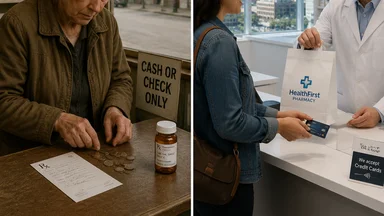
The experience of TB diagnosis and treatment differs sharply by income. Wealthy patients in cities can access private hospitals that offer comprehensive DST within a week. They pay out-of-pocket or through insurance, and the turnaround time is measured in days. For a farmer in rural Bihar, the public system is the only option, and the wait is measured in weeks.
This disparity has consequences for disease control. Patients who can afford private care often receive faster diagnosis but may not complete treatment. A 2021 study in PLOS ONE found that private-sector TB patients in India had a treatment success rate of around 60%, compared to 85% in the public sector. The reasons include high costs of follow-up tests and inconsistent drug supplies in private pharmacies. Some private providers prescribe suboptimal regimens or fail to monitor patients for adverse effects, contributing to the development of drug resistance.
For the rural poor, the public programme offers free diagnostics and drugs, but the hidden costs of travel and lost wages can be prohibitive. A patient from a remote village may need to make multiple trips to the district hospital—one for sputum collection, another for results, and yet another for treatment initiation. Each trip can cost a day's wages and transport fees of roughly 100–200 rupees. Over the course of treatment, these costs can exceed a month's income.
The result is a two-tier system: rapid, expensive care for the few, and slow, free care for the many. This inequity not only harms individual patients but also undermines population-level efforts to curb transmission. As long as the public programme cannot deliver timely DST, drug-resistant strains will continue to circulate. Some critics argue that the solution is not merely to speed up public-sector diagnostics, but to regulate the private sector more tightly, ensuring that all TB patients receive standardized care regardless of where they seek treatment.
What WHO Guidelines Recommend vs. What Happens
The World Health Organization's 2022 consolidated guidelines on TB recommend that all patients with bacteriologically confirmed TB receive DST for at least rifampicin at the time of diagnosis. For those with rifampicin resistance, DST for second-line drugs should be performed as soon as possible, ideally within 48 hours. India's own National Strategic Plan for TB Elimination 2017–2025 endorses these targets.
On paper, the alignment is clear. In practice, the gap between recommendation and reality is wide. A 2023 report by the Central TB Division found that only about 60% of notified TB patients in India received DST for rifampicin at diagnosis. For second-line DST, the figure was below 30%. In rural districts, these percentages were even lower.
The reasons are systemic. District laboratories often face stockouts of culture media and reagents. The supply chain for GeneXpert cartridges has improved, but interruptions still occur. A 2022 audit in Madhya Pradesh found that 15% of Xpert machines were non-functional due to maintenance issues or lack of trained operators. Shortages of laboratory technicians are chronic, with many positions vacant for months. The problem is compounded by high turnover: trained technicians often leave for better-paying jobs in urban centres or abroad.
Even when samples reach the lab, the culture process is slow by design. Liquid culture systems, such as the BACTEC MGIT, can reduce turnaround time to around two weeks, but these are not universally available. Solid culture on Lowenstein-Jensen medium, still common in smaller labs, takes six to eight weeks. The NTEP has begun rolling out liquid culture systems, but the pace of expansion is limited by budget and training requirements. A single liquid culture instrument can cost roughly 1.5 million rupees (around US$ 18,000), and each test requires expensive consumables that must be imported.
An additional complication is the need for biosafety level 3 (BSL-3) facilities for culture-based DST. Building and maintaining such labs is costly, and many districts lack the infrastructure. The NTEP has designated certain regional labs as BSL-3 centres, but samples from outlying areas must be transported over long distances, adding further delays.
The Cost of Waiting: Amplified Transmission and Resistance
The public health cost of diagnostic delay is measured in infections and deaths. A person with active pulmonary TB infects an estimated 10 to 15 contacts per year. If that person has drug-resistant TB, the contacts who become infected will also have drug-resistant strains, perpetuating a cycle that is harder and more expensive to break.
Treatment outcomes for MDR-TB are poor. The global cure rate for MDR-TB is around 50%, compared to 85% for drug-sensitive TB. In India, a 2020 cohort study published in Clinical Infectious Diseases found that only 48% of MDR-TB patients treated in the public programme achieved a successful outcome. Delayed DST was a significant predictor of failure. Patients who started treatment without knowing their resistance profile often experienced clinical deterioration, requiring longer and more toxic regimens.
The economic burden is also substantial. Treating drug-sensitive TB costs the programme roughly 5,000 rupees per patient. Treating MDR-TB costs between 1.5 and 3 lakh rupees—30 to 60 times more. The longer a patient remains undiagnosed or on ineffective treatment, the more they spread the disease, increasing the number of future cases. A modelling study from 2021 estimated that reducing DST turnaround time from six weeks to two weeks could prevent roughly 10% of new MDR-TB cases over a decade, saving the programme billions of rupees.
The COVID-19 pandemic exacerbated these delays. Lockdowns disrupted sample transport and laboratory operations, leading to a backlog of DST. A 2021 study in BMC Public Health estimated that TB case notifications in India dropped by 25% in 2020, and many of those missed cases may have progressed to drug resistance. The programme has since recovered, but the backlog of undiagnosed MDR-TB may take years to clear. Some experts argue that the pandemic also created an opportunity: the rapid scale-up of molecular diagnostics for COVID-19 demonstrated that India could deploy point-of-care testing widely. Similar political will could be applied to TB.
Local Innovations That Could Close the Gap
Several grassroots initiatives are attempting to shorten DST turnaround times. In Pune, a laboratory run by the Foundation for Medical Research has piloted pooled sample testing for Xpert. By combining multiple sputum samples into one test, they can screen large numbers of patients quickly, reducing per-sample cost and turnaround time. The approach is being evaluated for wider use. However, pooled testing has limitations: it may miss samples with low bacterial load, and it requires careful validation to ensure accuracy.
In Andhra Pradesh, the NTEP has partnered with a private courier company to transport sputum samples from remote clinics to district labs. The courier network ensures same-day pickup and delivery, cutting transport time from days to hours. The programme also uses a digital tracking system that sends SMS alerts to patients when results are ready, reducing loss to follow-up. This model has been praised for its simplicity, but it depends on reliable road infrastructure and mobile network coverage, which are not uniform across rural India.
Mobile diagnostic vans have been deployed in parts of Gujarat and Maharashtra. These vans are equipped with GeneXpert machines and can travel to village health camps, providing on-the-spot DST for rifampicin resistance. The model has shown promise in reaching underserved populations, though it requires sustained funding and maintenance. In one pilot, the vans were able to reduce the time from sample collection to result to under 24 hours. However, the vans cannot perform culture-based DST for second-line drugs, so they are not a complete solution.
Simple incentives can also help. In a pilot in Tamil Nadu, the programme provided small cash payments to patients who returned for their DST results within a week. The intervention improved follow-up rates by roughly 20%. While not a substitute for faster testing, it addresses the human factor in the diagnostic chain. Critics note that such payments may not be sustainable at scale and could create perverse incentives, but the pilot demonstrated that even modest financial nudges can have measurable effects.
These innovations are encouraging, but they remain small-scale. Scaling them up would require policy changes and additional investment. The NTEP has expressed interest in expanding pooled testing and courier networks, but progress has been slow. One barrier is the lack of a centralized data system to track sample flow and turnaround times across districts. Without such data, it is difficult to identify bottlenecks and target interventions effectively.
What Still Needs to Change in Policy and Funding
The gap between India's TB elimination targets and the reality of DST delays highlights a chronic underinvestment in diagnostic infrastructure. The NTEP's budget for laboratory strengthening has increased in recent years, but it still accounts for a small fraction of the overall TB budget. In 2023, the programme spent roughly 15% of its allocation on diagnostics, compared to 40% on drugs and 30% on patient support. This imbalance reflects a historical emphasis on treatment over diagnosis, but as drug resistance grows, that calculus may need to shift.
Public-private partnership models remain underutilized. Private labs could be contracted to perform DST at subsidized rates, with results reported to the public surveillance system. Some states, such as Kerala, have established such partnerships, but coverage is patchy. Regulatory hurdles and concerns about quality control have slowed adoption. The government has issued guidelines for empanelling private labs, but enforcement is weak. In many districts, private labs operate without oversight, and their test results are not always reliable.
Central procurement delays also hamper equipment rollout. Tenders for GeneXpert machines and liquid culture systems often take months to process, and customs clearance for imported reagents can add further delays. The government has attempted to streamline procurement, but bureaucratic inertia persists. A 2023 report by the Comptroller and Auditor General of India found that delays in procurement had led to the expiry of reagents worth millions of rupees, highlighting the inefficiency of the current system.
Political will for TB elimination, which was high during the 2018–2020 period, appears to have waned. The National Strategic Plan set a target of eliminating TB by 2025, but that deadline now seems unrealistic. Without renewed commitment and sustained funding, the six-week wait for DST will remain a barrier to control. Some advocates argue that the target should be revised to a more achievable date, such as 2030, with interim milestones for diagnostic coverage and turnaround time.
The cost of inaction is high. Every week of delay means more infections, more resistance, and more deaths. The tools to close the gap exist—faster diagnostics, better supply chains, and innovative service delivery models. What is lacking is the political and financial will to deploy them at scale. The story of TB in rural India is not one of failure, but of unfinished progress. The country has shown it can reduce TB incidence and mortality. But until the six-week gap is closed, the disease will continue to exploit the weakest link in the diagnostic chain.
Disclaimer: This article is for informational purposes only and does not constitute medical advice. Individuals with symptoms of tuberculosis should seek evaluation from a qualified healthcare provider.