Community Health Worker Burnout Drives Hypertension Care Gaps in South Africa
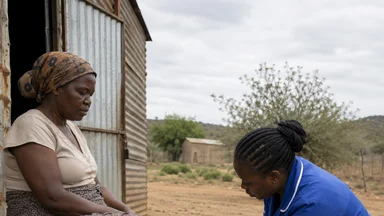
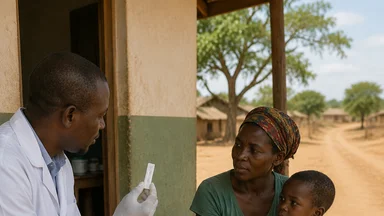
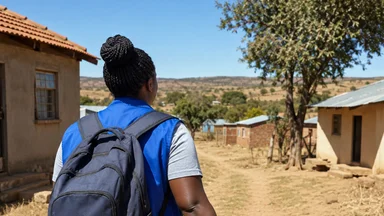
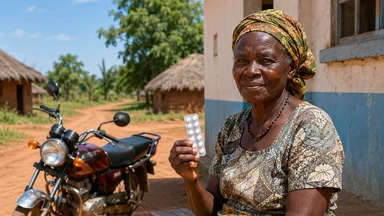
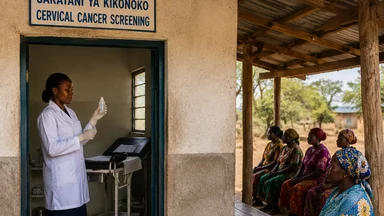
Nomsa M., a 54-year-old grandmother in rural Eastern Cape, used to have her blood pressure checked every two weeks by a community health worker named Thandi. Thandi walked 8 kilometers each visit, brought medication refills, and reminded Nomsa to cut back on salt. Then Thandi left the program. She was burned out, earning the equivalent of US$ 120 a month for covering 280 households. Six months later, Nomsa’s blood pressure is uncontrolled. She now travels two hours by minibus to the nearest clinic, a trip she cannot always afford. Her story is not unique. Across South Africa, community health workers (CHWs) are the backbone of hypertension care for millions, yet the workforce itself is crumbling under the strain.
The Hypertension Burden and the CHW Lifeline
South Africa has one of the highest hypertension prevalence rates in the world. Roughly 40% of adults are affected, according to estimates from the South African Medical Research Council. The condition is a leading cause of stroke, heart failure, and kidney disease, particularly among Black South Africans who face a combination of genetic predisposition, high dietary salt intake, and limited access to care. For patients in low-income communities, the public health system is often the only option, and within that system, CHWs serve as the first point of contact.
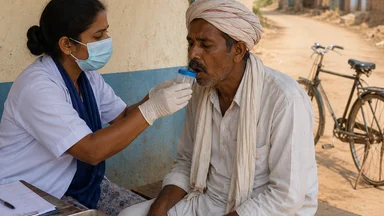
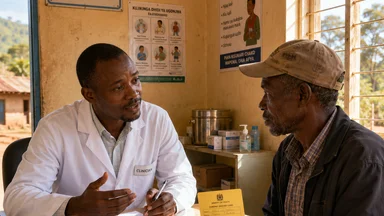
CHWs perform a wide range of tasks: they screen for elevated blood pressure, refer patients to clinics, track medication adherence, and provide health education. In many areas, they are the ones who ensure that patients like Nomsa stay on treatment. A 2019 study in the journal Global Health Action estimated that CHWs in South Africa reach roughly 10 million people annually, many of whom would otherwise fall through the cracks. The model is cost-effective: each CHW can manage hundreds of households at a fraction of the cost of a nurse or doctor.
But the system is fragile. When CHWs leave—and many do—the continuity of care collapses. Nomsa’s lost follow-up is a small example of a broader pattern. A 2022 report by the Health Systems Trust found that turnover rates among CHWs in some provinces exceed 40% per year, leading to gaps in hypertension control that can last months. The burden of replacing and retraining workers falls on already stretched primary care teams, creating a cycle of instability.
Workload and Emotional Toll on CHWs
CHWs in South Africa typically cover between 200 and 300 households each—far above the 150-household cap recommended by the World Health Organization. Their pay is modest, often below the minimum wage, and many are classified as “volunteers” rather than formal employees, meaning they lack benefits, job security, and access to mental health support. A 2021 survey by the Community Health Workers National Consortium found that 70% of CHWs reported symptoms of emotional exhaustion, and nearly half said they had considered leaving the job in the past year.
The emotional toll is significant. CHWs regularly witness patients suffering from complications of uncontrolled hypertension: strokes, heart attacks, amputations. They attend funerals. They manage the guilt of not being able to do more. “You carry the weight of the community on your shoulders,” one CHW from KwaZulu-Natal told researchers in a 2023 qualitative study. “Some days you go home and you cry.”
Research by Mutyambizi et al. (2022), published in the International Journal of Environmental Research and Public Health, quantified the link between burnout and turnover among CHWs in South Africa. The study found that CHWs with high burnout scores were three times more likely to intend to leave within six months. Only about 30% of CHWs reported receiving regular supervision or debriefing sessions, despite evidence that such support reduces turnover. The authors concluded that addressing burnout is not just a worker welfare issue—it is a patient safety issue.
Wealth Gradient: Clinic vs. Community Responses
The impact of CHW burnout is not evenly distributed. Wealthier patients in urban areas can access private general practitioners, specialist hypertension clinics, and digital monitoring tools like home blood pressure cuffs with Bluetooth connectivity. For them, the loss of a CHW is an inconvenience, not a crisis. They can afford to see a doctor, buy medication, and monitor their own health. The private sector, as of late 2024, offers telemedicine consultations and medication delivery services that bypass the CHW network entirely.
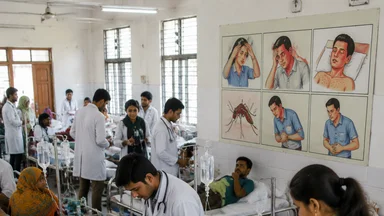
In contrast, patients in rural and low-income areas depend almost entirely on CHWs. Public clinics are often understaffed and under-resourced, with long waiting times and intermittent medication stockouts. A 2023 audit by the Treatment Action Campaign found that in some districts, a patient with hypertension must wait an average of 4 hours to see a nurse, and only 60% of clinics have a dedicated chronic disease room. When CHWs burn out and leave, patients lose the only consistent link to care they have.
The disparity is stark: a 2022 analysis in The Lancet Global Health showed that blood pressure control rates among the wealthiest quintile in South Africa were roughly 50%, while among the poorest quintile they were below 20%. CHW burnout widens this gap, because the most vulnerable patients are the ones whose care is most dependent on a fragile workforce. As one public health official in Limpopo put it, “We are expecting the poorest people to be saved by the most precarious workers.”
Evidence from the HPTN 071 Study
One of the most rigorous evaluations of CHW-led hypertension care in South Africa came from the HPTN 071 (PopART) trial, conducted in the Western Cape and surrounding areas between 2014 and 2018. The trial, originally designed to test a combination HIV prevention package, included a hypertension component in which CHWs provided screening, referral, and adherence support. Results published in 2020 showed that systolic blood pressure dropped by an average of 5–8 mmHg in the intervention arm compared with standard care.
However, the effect was not uniform. In communities where CHW caseloads exceeded 250 households, blood pressure reductions were smaller and not statistically significant. Retention of CHWs was also a challenge: after 12 months, only about 50% of CHW positions remained filled, and the turnover was highest in the poorest communities. The study, which involved roughly 1,200 participants, highlighted both the potential and the fragility of the CHW model. When the workforce is stable and supported, it works. When it is not, the gains evaporate.
The trial also revealed that CHWs who received regular supervision and a modest performance-based bonus were more likely to stay and had better patient outcomes. This finding aligns with other evidence from sub-Saharan Africa suggesting that supervision and financial incentives are critical for retention. Yet in most South African programs, supervision remains sporadic and bonuses are rare.
Policy Gaps and Potential Solutions
South Africa’s National Health Insurance (NHI) plan, signed into law in 2023, includes provisions to formalize CHWs as part of the primary care workforce. The plan envisions a cadre of trained, salaried CHWs with defined roles, supervision, and career pathways. Pilot programs in KwaZulu-Natal and the Western Cape have tested elements of this model: offering stipends of roughly US$ 250 per month, providing basic training in hypertension management, and capping caseloads at 150 households. Early results are promising—turnover in the pilot sites dropped to about 15% per year, compared with 40% in non-pilot areas.
The WHO recommends a caseload cap of 150 households per CHW, but scaling this nationally would require hiring an estimated 50,000 additional CHWs, at a cost of hundreds of millions of dollars. Political will is uncertain, and the NHI rollout has faced legal challenges and budgetary constraints. Meanwhile, some provinces have experimented with peer support groups, where CHWs meet weekly to share experiences and coping strategies. A 2023 evaluation in Mpumalanga found that such groups reduced self-reported burnout scores by 30% over six months.
Digital tools also offer a low-cost way to reduce isolation and improve supervision. In several pilot programs, CHWs use WhatsApp groups to report patient data, ask questions, and receive feedback from nurses. A 2024 study in Digital Health found that CHWs using a simple mobile reporting app were 20% more likely to remain in their roles after one year, compared with those without digital support. However, connectivity remains a barrier in remote areas, and the tools must be designed to fit the workflow rather than add to it.
What Works: Lessons from Successful Programs
International experience offers lessons for South Africa. Brazil’s Estratégia Saúde da Família (Family Health Strategy) employs over 280,000 CHWs with formal salaries, supervision, and career ladders. The program has been credited with reducing hypertension-related mortality by roughly 20% over two decades, and CHW turnover in Brazil is less than 10% per year. Key features include integration with mental health support—CHWs have access to regular debriefing sessions with psychologists—and community ownership, where CHWs are selected by the communities they serve.
In South Africa, similar approaches have shown promise. A pilot in the Eastern Cape, run by the nonprofit organization Rural Health Advocacy Project, trained CHWs to screen for depression alongside hypertension, and provided monthly group debriefing sessions. Turnover in the pilot was 40% lower than in comparison sites. The program also created a certificate in community health work, linked to a higher pay grade, which improved retention by offering a path for advancement.
But scaling these programs requires more than evidence—it requires political will and sustainable funding. The cost of training and supporting a CHW for one year is estimated at US$ 1,500–2,000, including salary, supplies, and supervision. For a country with a constrained health budget, this is a significant investment. Yet the cost of inaction is higher: replacing a trained CHW costs US$ 800–1,200 in recruitment and training, and the health consequences of uncontrolled hypertension—stroke, kidney failure, heart failure—drive up hospital costs that dwarf preventive care.
Counter-Arguments: Is the CHW Model Sustainable?
Not all experts agree that expanding the CHW workforce is the optimal path. Some argue that the model, while well-intentioned, risks institutionalizing second-class care for the poor. “We are creating a parallel system where the wealthy see doctors and the poor see CHWs,” says Dr. Sipho Mkhize, a public health researcher at the University of Cape Town. “If we truly want equity, we should invest in strengthening primary care clinics and hiring more nurses, not relying on an underpaid, overstretched volunteer force.” This perspective points to the risk of a two-tier health system, where CHWs are seen as a cheap fix rather than a genuine investment in community health.
Others question the evidence base for CHW-led hypertension management. While the HPTN 071 trial showed positive results, a 2023 systematic review in Cochrane Database of Systematic Reviews found that the quality of evidence for CHW interventions in hypertension is moderate at best, with high heterogeneity across studies. The review noted that many trials had short follow-up periods and high attrition rates, making it difficult to assess long-term impact. “We need more rigorous, longer-term studies before we can confidently say that CHWs are the solution to South Africa’s hypertension crisis,” says Dr. Nomsa Dlamini, a cardiologist at the University of the Witwatersrand.
There are also operational challenges that go beyond burnout. CHWs often lack reliable transportation, which limits their reach in remote areas. They may face safety risks, including violence in some communities. And the integration of CHWs into the formal health system is uneven, with some clinics treating them as full team members and others dismissing their contributions. These issues compound burnout and turnover, and they require systemic solutions that go beyond salary increases or caseload caps.
The Cost of Inaction for Patients and Systems
The human cost of CHW burnout is measured in strokes and heart attacks that could have been prevented. Uncontrolled hypertension is a leading cause of death in South Africa, accounting for roughly 1 in 5 deaths among adults, according to the South African National Department of Health. Emergency department visits for hypertension-related complications cost the health system an estimated 10 times more than routine preventive care. A 2023 study in BMJ Global Health calculated that a 10% reduction in CHW turnover could prevent roughly 2,000 strokes per year in South Africa, saving the system approximately US$ 15 million annually.
For patients like Nomsa, the cost is personal. She now spends US$ 8 to travel to the clinic, a sum that consumes a significant portion of her monthly pension. She has missed two appointments in the past three months. Her blood pressure, measured last week at the clinic, was 168/102 mmHg—dangerously high. The nurse prescribed a new medication, but Nomsa is not sure she can afford it. She misses Thandi, who used to bring her pills and sit with her on the porch, talking about her grandchildren and reminding her to take the medicine. “She was like family,” Nomsa says. “Now I am alone.”
The story of CHW burnout in South Africa is a story of a system that asks too much of its most vulnerable workers, and in doing so, fails the patients who need them most. Addressing burnout is not just a matter of worker welfare; it is a population health priority. Without investing in the CHW workforce—fair pay, manageable caseloads, supervision, and mental health support—the gains of the NHI and other reforms will remain out of reach for the people who need them most. The evidence is clear. The question is whether the political will will follow.
This article is for informational purposes only and does not constitute medical advice. Individuals with hypertension should consult a healthcare provider for personalized care.