Dengue Serotype Shifts Outpace Clinician Awareness in Bangladesh Public Hospitals
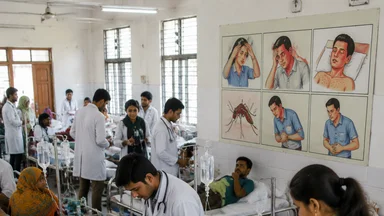
Dhaka's public hospitals are filling with dengue patients again, but the virus circulating this year is not the one clinicians expect. Bangladesh recorded more than 60,000 cases in 2025, and early data from the International Centre for Diarrhoeal Disease Research, Bangladesh (ICDDR,B) suggest that DENV-3 has become the dominant serotype in the capital, displacing DENV-2, which had been most common since 2018. The shift matters because prior infection with one serotype offers little protection against another, and secondary infection with a different serotype raises the risk of severe dengue through a mechanism called antibody-dependent enhancement. Yet most clinicians in public hospitals still treat all suspected dengue identically, unaware that the rules of the disease have changed.
Dhaka's Dengue Surge Masks a Serotype Switch
Bangladesh's dengue seasons have grown more intense over the past decade. The country reported over 100,000 cases in 2023, and while 2024 saw a modest decline, 2025 has already surpassed 60,000 by mid-year, with Dhaka accounting for roughly 40% of admissions. What makes this year different is the serotype composition. ICDDR,B's routine surveillance, which sequences a sample of isolates each month, shows that DENV-3 now makes up about 65% of sequenced viruses in Dhaka, up from less than 10% in 2022. DENV-2, which had been dominant for years, has fallen to roughly 25%.
This shift is not unprecedented—serotype turnover occurs every few years in hyperendemic settings—but the speed of the change has caught many clinicians off guard. In neighboring India and Thailand, similar shifts have preceded larger outbreaks, partly because population immunity to the newly dominant serotype is low. Children are especially vulnerable: they are less likely to have been exposed to DENV-3 in previous seasons. A study by ICDDR,B published in the Journal of Infectious Diseases in June 2025 documented a 30% increase in severe dengue cases among children under five admitted to Dhaka Medical College Hospital compared to the same period in 2024. The study reviewed 450 pediatric admissions and controlled for overall case numbers, confirming the increase was not simply due to more children being infected.
Severe dengue—characterized by plasma leakage, severe bleeding, or organ impairment—requires prompt intravenous fluid resuscitation and close monitoring. When clinicians do not anticipate severe disease, those interventions can be delayed. One study from ICDDR,B found that children admitted with warning signs of severe dengue waited an average of 4 hours longer to receive appropriate fluid management when the treating physician had not considered the possibility of a serotype mismatch. The gap is small but meaningful in a disease where hours can determine outcomes.
National Guidelines Still Assume a Stable Virus
Bangladesh's national dengue management guidelines, last updated in 2018, do not include serotype-specific triage recommendations. The protocol divides patients into groups A, B, and C based on clinical signs and platelet counts, but it assumes that all dengue behaves roughly the same. Clinicians are instructed to monitor for warning signs—abdominal pain, persistent vomiting, mucosal bleeding—but not to adjust their index of suspicion based on which serotype is circulating. Public hospital laboratories do not perform serotyping on a routine basis.
The most common diagnostic test used in these hospitals is the NS1 antigen test, which detects a protein common to all four dengue serotypes. It cannot distinguish DENV-1 from DENV-3, nor can it tell whether a patient has had a prior infection. A positive NS1 test confirms dengue, but it provides no information about serotype or infection number. In a setting where serotype shifts are known to increase severe disease, this blind spot means clinicians lack the data they would need to stratify risk at the bedside.
The 2018 guidelines were developed when DENV-2 accounted for the vast majority of cases in Dhaka. At that time, a single algorithm made sense. But serotype dynamics are not static, and guidelines that are not updated regularly become anchors for outdated practice. The World Health Organization (WHO) recommends that countries with hyperendemic dengue conduct periodic serotype surveillance and update clinical protocols accordingly. Bangladesh's Directorate General of Health Services has not issued an update since before the COVID-19 pandemic.
Some clinicians have begun to adapt informally. At a few large hospitals, senior physicians have started requesting PCR testing for patients with unusual presentations—rapid deterioration despite normal platelet counts, for instance. But PCR is not available in most public facilities, and the cost of sending samples to ICDDR,B (roughly US$8–12 per test) is not covered by the hospital budget. As a result, serotyping remains ad hoc and dependent on research project funding.
WHO Warning on Secondary Infection Risk Unheeded
In March 2025, the WHO's Southeast Asia Regional Office issued an advisory noting that several countries in the region, including Bangladesh, were experiencing serotype shifts that could elevate the risk of secondary infection severe dengue. The advisory specifically mentioned that DENV-3 had re-emerged after years of low circulation and that populations with high prior exposure to DENV-2 were at particular risk. It urged member states to review their clinical algorithms and consider adding serotype surveillance data to early warning systems.
The mechanism behind the increased risk is antibody-dependent enhancement (ADE). When a person infected with one serotype later encounters a second serotype, pre-existing antibodies from the first infection can bind to the new virus but fail to neutralize it. Instead, the antibody-virus complex is taken up by immune cells more efficiently, leading to higher viral loads and a more intense inflammatory response. ADE is well documented for dengue and is the reason that sequential infections are more dangerous than first infections. The risk is highest when the interval between infections is 1–3 years, which fits the pattern of Bangladesh's annual outbreaks.
Despite the WHO advisory, Bangladesh's national dengue control program did not issue an updated clinical algorithm or disseminate the advisory to public hospitals. A review of circulars from the Directorate General of Health Services between March and June 2025 shows that no directive mentioning serotype shift or ADE was sent to district or tertiary hospitals. Clinicians at Dhaka Medical College Hospital told local media they were unaware of the advisory until a journalist asked about it.
The gap between international guidance and local practice is not unique to Bangladesh. A 2023 survey of dengue management in seven Asian countries found that less than half of clinicians could correctly define ADE. But the consequences are amplified in Bangladesh because of the sheer volume of cases and the limited capacity of public hospitals. When every bed is needed, triage decisions based on outdated assumptions can compound overcrowding and divert resources from patients who need them most.
ICDDR,B Data Show Misclassification in Ward Records
Data from ICDDR,B's ongoing surveillance project, which includes retrospective PCR testing of stored samples from fatal cases, reveal a troubling pattern of misclassification. Among 120 dengue fatalities in Dhaka between January and May 2025, hospital records coded the serotype as "unknown" or left the field blank in 35% of cases. In the 70% of fatalities where PCR was performed, DENV-3 was identified in 70% of samples. Many of these patients had been classified as "severe dengue without warning signs" on admission, a category that typically triggers less intensive monitoring.
At Dhaka Medical College Hospital, the diagnostic lag is compounded by reliance on platelet counts as a proxy for severity. Clinicians often use a platelet count below 100,000 per microliter as a threshold for admission and closer observation. But some patients with DENV-3 infection develop severe plasma leakage before their platelet count drops significantly. In the ICDDR,B dataset, roughly 15% of fatal cases had platelet counts above 100,000 at the time of deterioration, meaning that the standard trigger for escalation was absent.
Misclassification also affects reporting. Bangladesh's national dengue surveillance system relies on case reports submitted by hospitals, which include a checkbox for serotype if known. But because most hospitals do not perform serotyping, the majority of reports are filed as "dengue, unspecified." This creates a feedback loop: national statistics undercount serotype-specific trends, which in turn reduces the impetus to update guidelines. The WHO has noted that countries with robust serotype surveillance—such as Thailand and Sri Lanka—are able to issue early warnings about shifts, while countries with patchy data often miss the window for preparedness.
The ICDDR,B team has been advocating for a simple change: storing blood samples from all hospitalized dengue patients for retrospective PCR. The cost is modest, and the data would allow real-time tracking of serotype circulation. But the proposal has not been adopted by the Ministry of Health, partly because of competing priorities and partly because the infrastructure for sample transport and cold chain is weak outside Dhaka.
Clinician Survey Reveals Knowledge Gaps
In April 2025, researchers at ICDDR,B conducted a survey of 200 physicians working in the medicine and pediatrics departments of four large public hospitals in Dhaka: Dhaka Medical College Hospital, Sir Salimullah Medical College, Shahid Suhrawardy Medical College, and Mugda Medical College. The survey tested knowledge about serotype prevalence, ADE, and current national guidelines. The results are sobering.
Only 12% of respondents correctly identified DENV-3 as the predominant serotype in Dhaka in 2025. The majority—55%—thought DENV-2 was still dominant, and 33% said they did not know. When asked about antibody-dependent enhancement, 72% either had not heard of the term or could not describe its relevance to dengue severity. Even among those who had heard of ADE, only 40% could correctly state that it increases the risk of severe disease during a second infection with a different serotype.
The survey also asked about training. More than 80% of respondents said they had received no formal education on serotype shifts or ADE since graduating from medical school. Continuing medical education (CME) programs on dengue are offered sporadically, but they tend to focus on fluid management and warning signs, not on the virological context that determines who is at highest risk. One respondent commented that they had "never thought about serotypes" because the NS1 test does not distinguish them.
The knowledge gap is not primarily a failure of individual clinicians—it is a systemic failure of information flow. National guidelines, CME curricula, and hospital protocols have not kept pace with the virus. In the absence of updated algorithms, clinicians rely on experience, but experience with DENV-2 does not prepare them for the behavior of DENV-3. A senior physician at Dhaka Medical College Hospital, who asked not to be named because she was not authorized to speak to the press, told the survey team that she had "learned more about serotypes from the ICDDR,B research team than from any official training."
Low-Cost Interventions Could Bridge the Gap
The gap between evidence and practice is wide, but several low-cost interventions could narrow it. The most immediate is updating the national dengue management guidelines to include a section on serotype shifts and ADE. A one-page addendum distributed to all public hospitals, with a simple algorithm for risk stratification based on prior infection history and local serotype data, would cost almost nothing to produce and disseminate. The WHO has published a template for such an algorithm, which countries like Sri Lanka have adapted for local use.
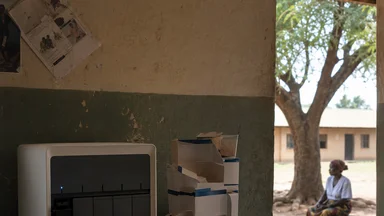
Diagnostically, serotype-specific rapid tests are in development, though none are yet commercially available at scale. A more realistic near-term option is the multiplex PCR panel developed by ICDDR,B, which can detect and serotype dengue in a single reaction. The cost per test is under US$5 at scale, and the equipment required—a real-time PCR machine—is already present in several public hospital laboratories, though it is often used for other purposes. Training laboratory technicians to run the panel and establishing a sample referral network could be done within a year at a cost that is small relative to the burden of disease.
A third intervention is simple: include serotype surveillance data in the weekly situation reports that the Directorate General of Health Services already sends to hospitals. Currently, those reports list case counts and deaths but not serotype distribution. Adding a single line—"Predominant serotype this week: DENV-3"—would alert clinicians to the shift and prompt them to consider ADE in patients with a history of prior dengue. The data are already being collected by ICDDR,B; the missing step is integration into the communication channel.
None of these interventions are expensive or technologically demanding. What they require is recognition that the problem exists and a willingness to act on evidence that is already available. The alternative—waiting for another outbreak to force change—carries a human cost that Bangladesh's public hospitals can ill afford.
However, implementing these changes is not without barriers. Updating national guidelines requires a formal review process that can take months, and the Directorate General of Health Services has limited bandwidth after years of pandemic response. Disseminating new protocols to hundreds of public hospitals, many in remote areas with poor internet connectivity, is a logistical challenge. The multiplex PCR panel, while promising, depends on a steady supply of reagents and trained technicians—both of which are in short supply in Bangladesh's public health system. A 2024 assessment by the Ministry of Health found that 40% of district hospital laboratories lacked functional real-time PCR machines, and technician turnover is high due to low salaries. Furthermore, integrating serotype data into weekly reports would require coordination between ICDDR,B and the Directorate General of Health Services, which have historically operated in separate silos. Some officials have expressed concern that adding more data to already overburdened clinicians could lead to information fatigue rather than improved care. A dissenting view holds that the most urgent priority is not serotyping but ensuring basic dengue management—fluid resuscitation, platelet monitoring, and early warning sign recognition—is delivered consistently. According to this argument, even without serotype awareness, many severe cases could be prevented if existing guidelines were followed strictly. While this perspective has merit, it overlooks the fact that serotype shifts change the risk profile of patients, and that the same clinical signs may appear differently with DENV-3 versus DENV-2. Ultimately, both approaches are needed: strengthening basic care while also updating the virological context in which that care is delivered.
Next Epidemic Will Test Preparedness Again
Monsoon season 2026 is expected to bring another wave of dengue, and the serotype landscape will likely have shifted again. DENV-3 is unlikely to remain dominant indefinitely; serotype replacement is a cyclical phenomenon driven by population immunity. But the next shift could be just as destabilizing if clinicians remain unaware of the transition. Without a system for tracking serotypes in real time and updating clinical algorithms accordingly, each new epidemic will repeat the same pattern of delayed recognition and preventable severe disease.
Vaccination adds another layer of complexity. The only widely available dengue vaccine, CYD-TDV (Dengvaxia), has been shown to increase the risk of severe dengue in seronegative individuals—those who have never been infected before. In a setting where serotype shifts cause more secondary infections, vaccinating seronegative children could paradoxically raise their risk. Bangladesh has not introduced a national dengue vaccination program, but the question of whether to do so is under discussion. Without serotype surveillance and individual serostatus testing, a vaccination campaign could do more harm than good.
Bangladesh does not currently have a national serosurveillance program—a systematic effort to measure antibodies to dengue in the population over time. Such a program would allow health authorities to estimate the proportion of the population that has been exposed to each serotype and to predict which serotype is likely to cause the most severe disease in the next season. Several middle-income countries, including Brazil and Thailand, have implemented serosurveys and found them useful for guiding vaccination policy and outbreak response. The cost of a national serosurvey in Bangladesh has been estimated at roughly US$1–2 million, a fraction of the economic burden of dengue, which the World Bank puts at hundreds of millions of dollars annually.
Without action, the cycle will continue. Each year, a new serotype will emerge, clinicians will be caught off guard, and patients will suffer the consequences of a preventable knowledge gap. The tools to close that gap exist—updated guidelines, low-cost diagnostics, better data sharing—but they require a political and institutional commitment that has been slow to materialize. The virus is not waiting.
This article is for informational purposes only and does not constitute professional medical advice. Readers should consult qualified health providers for personal health decisions.