Cervical Cancer Diagnosis Costs Push Rural Kenyan Women Toward Public Clinics
The cost of cervical cancer screening in rural Kenya forces women to make difficult choices. A woman earning a few dollars a day must weigh the price of a clinic visit against the cost of food, school fees, or bus fare home. The difference between a public facility charging roughly $1–$2 and a private clinic asking $5–$15 can mean the difference between an early diagnosis and a late-stage cancer that might have been preventable.
Diagnosis Costs Drive Rural Women Away from Private Clinics
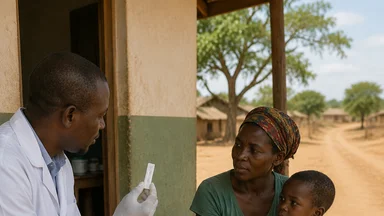
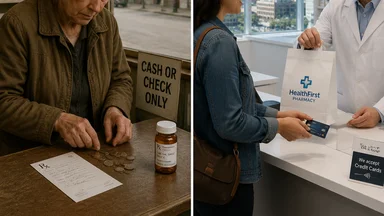
For women in counties like Kisumu, Homa Bay, or Migori, the nearest private clinic might be an hour's bus ride away. Once there, a visual inspection with acetic acid (VIA) — the most common screening method in low-resource settings — costs around $5 at a private facility, according to health workers interviewed for this article. An HPV DNA test, which is more sensitive but less available, can run up to $15 or more at private labs. By contrast, public clinics often charge $1–$2 for VIA, and some county health departments offer it for free during periodic campaigns.
But even $5 is a heavy burden for a household living on less than $2 a day per person. A 2023 survey by the Kenya Medical Research Institute (KEMRI) found that more than 40% of women who had never been screened cited cost as the primary reason. Many said they would rather wait until symptoms appear — by which time the cancer is often advanced — than spend money they cannot spare on a test that might come back normal.
The result is a predictable pattern: women who can afford private care get screened earlier, while those who rely on public facilities often present with stage III or IV disease. Grace Onyango, a nurse at a public clinic in Siaya County, told me that most of the cervical cancer patients she sees have never had a screening exam. “They come when they are bleeding heavily or in pain,” she said. “By then, treatment is much harder and more expensive.”
This cost-driven delay is not simply a matter of individual choice. It reflects a system in which out-of-pocket payments for screening create a regressive barrier: the poorest women pay the highest relative cost for early detection, and many end up paying nothing until it is too late.
Public Clinics Are Cheaper but Face Stockouts and Long Waits
Public clinics in Kenya offer VIA at low or no cost, but the savings come with trade-offs. Stockouts of acetic acid and other supplies are common, especially in remote health centers. A 2024 report by the Ministry of Health noted that roughly one in five public facilities experienced a VIA supply interruption lasting more than a week in the previous quarter. When supplies run out, women are turned away or told to come back later — sometimes weeks later.
Even when supplies are available, the wait can be long. Women often queue for three to five hours at a busy public clinic, only to receive a ten-minute exam. For a mother who has to arrange childcare or take time off from piecework, that wait is a real cost. “I took the whole day off,” said Grace Akinyi, a 34-year-old farmer from Busia County who finally got screened after three attempts. “The first time, they said the nurse was not there. The second time, they had no vinegar. The third time, I waited from 8 a.m. to 1 p.m.”
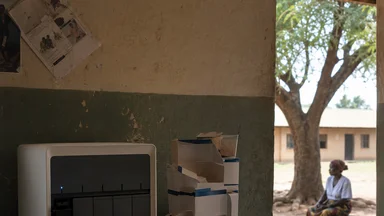
HPV DNA tests, which can detect the virus before visible lesions appear, are rarely available at public facilities in rural areas. When they are offered, they often require sending samples to a central lab in Nairobi or Kisumu, with results taking two to four weeks. By contrast, private labs in urban centers can return results in a day or two — but at a price that many cannot afford.
Referral for colposcopy, the next step after a positive VIA or HPV test, is another bottleneck. Public hospitals with colposcopy equipment are concentrated in county capitals, and wait times for an appointment can stretch to several weeks. Some women never make the referral appointment because they cannot afford the transport or the time away from work. “We lose many women between screening and treatment,” said Dr. Mary Wanjiku, a gynecologist at a county referral hospital. “The system is not designed to follow them.”
Private Clinics Offer Faster Service but Higher Fees Deter Follow-Up
Private clinics and labs fill a gap for women who can pay. They offer shorter waits, more reliable supplies, and faster results. HPV testing at a private lab in Kisumu costs roughly $20 — a steep sum, but one that some women are willing to pay for peace of mind. For those who test positive, private providers can often arrange colposcopy within a week, compared to a month or more in the public system.
Yet the speed and convenience of private care can create a different kind of barrier: the cost of follow-up. A woman who pays $20 for an HPV test may find herself unable to afford the $30–$50 for a colposcopy or the $100–$200 for cryotherapy or loop electrosurgical excision procedure (LEEP) at a private clinic. Some women, after receiving a positive result, simply do not return. A 2022 study in western Kenya found that among women diagnosed with precancerous lesions at private clinics, only about half completed treatment within six months — compared to roughly two-thirds at public facilities where treatment was subsidized.
This drop-off is partly financial. But it also reflects a mismatch between the speed of diagnosis and the pace of treatment. Private clinics may excel at the first step but offer little support for the second. “They give you the result and say, ‘You need treatment,’ but they don't help you figure out how to pay for it,” said Faith Wanjiku, a 42-year-old teacher who tested positive at a private lab in Kakamega. She eventually sought treatment at a public hospital, where the procedure was free, but she had to wait three months for an appointment.
For some women, the high cost of private screening leads them to skip follow-up entirely, hoping the lesion will resolve on its own. That hope is often misplaced: precancerous lesions of the cervix can persist or progress over years, and without treatment, the risk of invasive cancer rises. The private sector, in this sense, can be both a solution and a trap.
Government Subsidies Aim to Narrow the Gap but Fall Short
Kenya's National Cancer Control Program (NCCP) has recognized the cost barrier and tried to address it. Since 2019, the program has subsidized VIA and HPV testing at selected public facilities, aiming to reduce out-of-pocket spending. In theory, any woman visiting a participating clinic should pay no more than $2 for screening. In practice, the subsidies are unevenly distributed. According to the NCCP's 2023 annual report, the program reached roughly 1.2 million women — about 30% of the target population of women aged 25–49 in high-risk counties.
The shortfall is due to limited budget allocation. Kenya spends about $0.50 per capita on cancer prevention, far below the World Health Organization's recommended $1.50 for low-income countries. The NCCP relies heavily on donor funding from organizations such as the Global Fund, PEPFAR, and the World Bank, which often come with geographic restrictions. Some counties, like Nyanza and Western, have received substantial support, while others, like the arid northeastern counties, have been largely left out.
Public-private partnerships have emerged to fill some gaps. For example, the Kenya Medical Association has partnered with private labs to offer HPV testing at reduced rates during awareness campaigns. But these initiatives are fragmented and often short-lived. A campaign that offers free screening in one district for a month does not create a sustainable system; women who miss the window may wait another year for the next one.
Donor-funded programs also face the problem of sustainability. When a five-year grant ends, the screening services it supported often end with it. County health departments, already stretched thin, rarely have the budget to take over. “We have seen cycles of investment and withdrawal,” said Dr. Peter Mwangi, a health economist at the University of Nairobi. “Each time a program ends, we lose not only the services but also the trust of the community.”
Task-Shifting and Community Outreach Improve Access but Not Equity
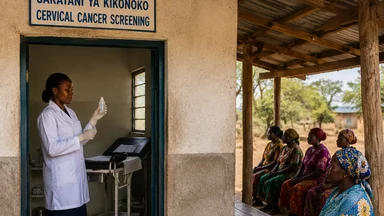
To reach women who cannot easily travel to clinics, Kenya has embraced task-shifting: training nurses and community health workers to perform VIA in local health posts and mobile screening camps. The approach has been successful in many settings. A 2023 study in Homa Bay County found that nurse-led VIA screening in community posts increased screening rates by 60% compared to facility-based services alone. The cost per woman screened dropped to under $5, including supplies and staff time.
Mobile camps take screening even further, setting up in marketplaces, schools, and village meeting points. They can screen dozens of women in a single day, often for free or a nominal fee. For women who cannot afford the bus fare to a clinic, a camp that arrives in their village is a lifeline. “I never would have gone to a hospital,” said Margaret Odhiambo, a 50-year-old grandmother from Bondo who was screened at a mobile camp last year. “But when they came here, I walked five minutes. It was easy.”
Yet even community-based screening has limits. Women who test positive for HPV or have visible lesions still need to travel to a facility for colposcopy and treatment. That travel — often to a county hospital an hour or more away — can cost $5–$10 for a round-trip bus fare, plus lost wages for the day. For a woman who already spent time and money to attend the screening camp, the additional cost can be prohibitive.
Transport costs are a hidden barrier that task-shifting does not solve. Some programs have tried to address it by providing vouchers or reimbursements, but these are rare and often run out of funds. “We can bring screening to the doorstep,” said Grace Ochieng, a community health worker in Siaya. “But if a woman needs treatment, she is on her own.” The result is that while outreach improves access to the first step of the cascade, it does little to ensure completion of the full sequence from screening to treatment.
Additional Data and Case Studies
In Kisumu County, a 2023 evaluation of the county's cervical cancer program found that only 28% of women who screened positive at public clinics received treatment within three months. The main barriers were transport costs and lack of awareness about free treatment options. In contrast, a private clinic in Kisumu city reported that 70% of women who screened positive completed treatment, but only because they were wealthier or had insurance. The disparity highlights how financial status determines outcomes.
Dr. James Kiprop, a public health officer in Turkana County, described the situation in the arid north: “We have one colposcopy machine for the entire county. Women from remote villages must travel up to 200 kilometers for treatment. Many simply give up.” Turkana has one of the lowest screening rates in Kenya, at under 10% for women aged 30–49. The county's health budget allocates less than 2% to cancer services.
A case study from Migori County illustrates the challenges. Jane Achieng, a 38-year-old mother of four, was screened at a mobile camp in 2022 and found to have precancerous lesions. She was referred to the county hospital for colposcopy, but the bus fare was $8 — more than she earned in a day. She delayed for six months, and by the time she reached the hospital, the lesions had progressed to stage I cancer. She required a hysterectomy, which cost her family $400 in out-of-pocket expenses. “If I had gone earlier, they could have frozen it for free,” she said. “Now I have nothing left.”
These stories are common. Health officials estimate that for every woman who completes the screening-to-treatment cascade, two to three are lost at some point along the way. The losses are concentrated among the poorest women, who face multiple barriers simultaneously.
What Clinicians Can Do: Practical Steps and Their Limitations
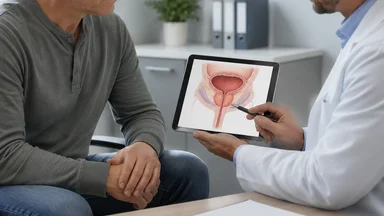
Clinicians working in both public and private settings can take concrete actions to lower the financial barriers that prevent women from completing the screening-to-treatment pathway. The first and simplest step is to ask. A brief conversation about how the woman traveled to the clinic, whether she took time off work, and who is caring for her children can reveal hidden costs that may prevent her from returning for follow-up. A 2021 study in Nairobi found that women who were asked about transport costs at their initial visit were significantly more likely to attend their colposcopy appointment.
Second, clinicians can offer same-day screening and treatment where possible. The “screen-and-treat” approach — in which a woman who tests positive for HPV or has visible lesions receives cryotherapy or LEEP during the same visit — eliminates the need for a separate follow-up trip. Kenya's Ministry of Health has endorsed this model, but it requires that clinics have both the equipment and the trained staff to perform treatment on site. As of 2024, only about 40% of public health centers in high-burden counties offered same-day treatment.
Third, clinicians can connect patients to existing subsidy programs. Many women are unaware that they may qualify for free or reduced-cost treatment through county health insurance schemes or donor-funded programs. A simple referral form or a phone call to a social worker can make the difference between a woman receiving treatment and dropping out of care. Some clinics have begun using “navigators” — lay health workers who guide patients through the system — with promising results.
Fourth, clinicians can advocate at the county level for HPV test subsidies. Currently, HPV DNA testing is not included in the national screening guidelines as a primary tool due to cost, but several counties have started pilot programs that offer it at subsidized rates. Clinicians who document the number of women lost to follow-up because of test costs can make a data-driven case for local investment.
Finally, clinicians can use simple cost-communication tools during consultations. A visual aid that shows the typical costs of screening, treatment, and transport — and the likely out-of-pocket expenses at each step — can help women plan financially. A 2022 randomized trial in western Kenya found that women who received a cost fact sheet were 30% more likely to complete the full screening-to-treatment cascade than those who did not. The tool cost less than $0.10 per patient.
However, these steps have limitations. In under-resourced settings, clinicians may lack the time, training, or support to implement them effectively. A nurse seeing 50 patients a day may not have the bandwidth to ask about transport costs or to make referral calls. Same-day treatment requires equipment that may be unavailable. Navigators need salaries that strained budgets cannot provide. And cost-communication tools are only useful if women can read or understand them. Critics argue that focusing on clinician-level interventions risks shifting responsibility away from systemic failures. “We shouldn't put the burden on individual health workers,” said Dr. Mwangi. “The system needs to change.” Still, for women who face immediate barriers, these steps can make a difference.
This article is for informational purposes only and does not constitute medical advice. Screening and treatment decisions should be made in consultation with a qualified health professional. The recommendations above are not universal and may not be feasible in all settings.