It's Not Just About Apps: Tools That Finally Made My Days Feel Lighter
You know that constant tug-of-war between staying on top of things and just wanting to breathe? I felt it too—juggling work, life, and personal goals, always one notification away from overwhelm. But slowly, quietly, the right digital tools changed everything. Not because they were flashy, but because they fit real life. This isn’t about tech for tech’s sake—it’s about how small, thoughtful features gave me back time, clarity, and calm. And honestly? They can do the same for you. It started with a single realization: I wasn’t failing because I wasn’t trying hard enough. I was failing because I was trying to remember too much. My brain was doing double duty—feeling everything and tracking everything. And no wonder I felt drained before breakfast.
The Morning Chaos That Used to Win
There was a time when my mornings felt like a race I never trained for. I’d wake up with my heart already racing, glancing at my phone before my feet even hit the floor. Emails, calendar alerts, a missed call from the school office, a text from my sister about Mom’s doctor appointment—boom, boom, boom. Before I’d brushed my teeth, I was already behind. My kitchen counter looked like a command center gone rogue: sticky notes in my kids’ handwriting, a printed grocery list I’d forgotten to bring last week, a Post-it with a phone number I couldn’t remember why I’d written down. I’d stand there, coffee cooling, trying to mentally sort through the noise—what needs to be done today? Who needs what? Did I reply to that teacher’s email? Did I pack the permission slip?
That mental clutter didn’t just make me late—it made me tense. I’d snap at my daughter for leaving her backpack by the door when really, I was frustrated with myself for not planning better. I’d walk into a room and forget why I was there, adding that to my invisible list of failures. The truth was, I wasn’t disorganized because I was lazy. I was overwhelmed because I was holding too much in my head. And that weight wasn’t just logistical—it was emotional. Every forgotten thing felt like proof I wasn’t doing enough. But here’s the thing I finally learned: the problem wasn’t me. The problem was the system—or lack of one. I wasn’t using tools to support me; I was using them to survive. And that’s when I decided to stop fighting the chaos and start designing around it.
How a Simple Reminder Became a Lifeline
The first real shift came from something so simple, I almost laughed when I tried it: a smart reminder that knew where I was. I used to write grocery lists—on paper, in notes, on my phone—but half the time, I’d drive right past the store without remembering I needed to go. Or worse, I’d remember when I was already there, standing in the produce section, trying to recall if we needed milk, bread, or both. I’d end up buying things we didn’t need and forgetting the one thing my son insisted on—frozen waffles. It felt silly, but it added up. One day, I set up a location-based reminder in a note app I already used. I just typed “Grocery run” and told it to remind me when I was near the store. And when I drove past two days later? My phone chimed gently: “Time to grab milk and waffles?”
I nearly pulled over. Not because it was revolutionary tech, but because it felt like someone finally had my back. That tiny nudge lifted a weight I didn’t even know I was carrying. No more mental sticky notes. No more guilt for forgetting. It wasn’t magic—it was just a small feature used in a smart way. I started experimenting. I set a reminder to call my mom when I was on my evening walk, since that’s when I had a few quiet minutes. I created one to review my to-do list every morning with my coffee. The key wasn’t doing more—it was thinking less. These reminders didn’t make me dependent on my phone; they freed me from having to remember everything. And that, I realized, was the whole point. Technology shouldn’t add to the noise. It should help you hear yourself again.
Taming the Note-Taking Jungle
Before I got serious about organization, my notes lived everywhere—and nowhere. I’d record voice memos while driving, take screenshots of recipes I wanted to try, jot down ideas on napkins, and send myself emails I’d never read. I had notes in three different apps, a physical journal I loved but rarely opened, and a drawer full of random scraps. When I needed something—a book title, a friend’s birthday, the name of that easy casserole—I’d waste ten minutes searching. I’d give up and decide I didn’t need it after all. It wasn’t just inefficient—it was discouraging. I started to believe I wasn’t creative or thoughtful. But the truth? I was just disorganized.
The turning point came when I found a note in my car glove compartment from two years prior—“Ask about yoga class for Mom.” My mom had moved into assisted living by then. That note represented a missed moment, a small kindness I’d wanted to offer but never followed through on. That’s when I knew I needed a real system. I picked one app—something simple, searchable, and synced across devices—and committed to using it for everything. No more excuses. Voice memo? Saved there. Screenshot? Tagged and filed. Grocery idea? In a recipe folder. I didn’t need perfection—just consistency. I created a few basic folders: Home, Family, Ideas, To-Do, and Inspiration. Nothing fancy. But the moment I could search “casserole” and find that recipe in two seconds? I felt like I’d reclaimed a piece of myself. Ideas I’d scribbled in passing turned into real projects—a birthday gift I actually made, a short essay I submitted to a local magazine. The system didn’t make me smarter. It just helped me keep track of the smart, caring, creative thoughts I was already having.
Calendar Hacks That Protect Your Energy
For years, I treated my calendar like a to-do list with times. If it wasn’t scheduled, it didn’t exist. But I’d overbook myself, double-book, or forget to eat lunch because no one had “invited” me to it. I was so focused on filling time that I forgot time was precious. Then I started thinking differently: what if my calendar wasn’t just about appointments, but about energy? What if I could design my days to protect my focus, my calm, and my joy?
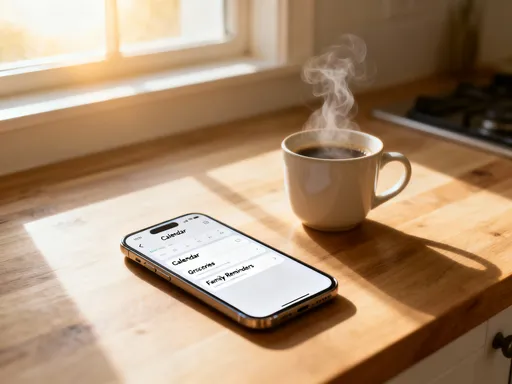
I began blocking time for things that mattered but never got scheduled—like “quiet time,” “plan dinner,” or “call a friend.” I used colors: blue for work, green for family, yellow for self-care, red for errands. Just seeing a sea of red made me pause and rethink. I started adding “buffer blocks”—30-minute gaps between meetings or tasks. At first, I felt guilty, like I was wasting time. But those buffers saved me. They gave me space to breathe, to walk around the block, to finish a thought. One hectic week, when my daughter was sick and I had three deadlines, those buffer blocks kept me from crashing. I could adjust, regroup, and still show up. I even started scheduling “no phone” time—just me, a notebook, and a cup of tea. My calendar became less about what I had to do and more about how I wanted to feel. And that changed everything. When you treat your time like something worth protecting, you start making choices that honor your rhythm, not just your responsibilities.
The To-Do List That Actually Works
I used to have a master to-do list that never got shorter. It lived in my notes app, grew longer every day, and made me feel worse every time I opened it. “Call dentist. Buy birthday gift. Clean garage. Research schools. Update will.” It was a mix of urgent, important, and someday-maybe tasks—all jumbled together. No wonder I felt stuck. I’d spend 20 minutes deciding what to tackle, then do something small just to check it off, leaving the big things untouched. The list wasn’t helping me—it was haunting me.
The breakthrough came when I stopped trying to do it all and started focusing on just three things a day. Three meaningful tasks. That’s it. I set up a simple list in my note app titled “Today’s Three.” Every evening, I’d review my master list and pick three priorities—no more, no less. Sometimes it was practical: “Pack school project.” Sometimes emotional: “Text Sarah—she’s having a hard time.” Sometimes personal: “Write one page of my journal.” I made sure at least one was something just for me. Then, I’d sync it with my calendar so I could see when I’d do it. The rule? If it’s not on today’s three, it can wait. This wasn’t about productivity hacks—it was about peace. I stopped feeling behind because I wasn’t trying to outrun an endless list. I started feeling accomplished because I was actually finishing things. One month, my “three” included “start photo album for Mom.” I’d been putting it off for years. But because it was on the list, and small enough to feel doable, I opened the folder, picked five photos, and printed them. It wasn’t perfect. But it was done. And Mom cried when she saw it. Progress, not perfection—now that’s a to-do list I can live with.
Shared Tools That Bring Families Closer
One of the most beautiful surprises was how these tools didn’t just help me—they helped us. I used to nag. “Did you pack your gym clothes?” “Don’t forget your library book.” “Who left the lights on?” It wasn’t because I was controlling—it was because I was trying to keep everything together. But nagging doesn’t build connection; it builds resentment. Then I tried something different: shared lists. I created a family grocery list in an app we all could access. I added milk, bread, apples. My son added gummy bears. My daughter added almond milk. No reminders, no yelling—just a living list that updated in real time.
Then I made a chore tracker—simple, no pressure. “Take out trash,” “feed the dog,” “wipe bathroom counter.” I didn’t assign names. I just listed the tasks. And something amazing happened: my kids started checking it. My teenager, who used to claim he “didn’t know” what he was supposed to do, actually updated the list after finishing something. “Took out trash – Jake,” he wrote. I didn’t ask. He just did it. It wasn’t about compliance—it was about ownership. We also started a “Family Wins” note—where anyone could add something good that happened. “Mom finished her project.” “I got an A on my quiz.” “We had pizza night.” Reading it every Sunday became our little ritual. These tools didn’t replace conversation—they made space for better ones. Instead of “Did you do it?” it became “Great job on the trash!” The system took the friction out, and connection slipped right in.
Small Tools, Lasting Peace
Looking back, I realize none of these changes were about mastering technology. They were about reclaiming my attention, my time, and my peace. The reminders, the notes, the calendar blocks, the shared lists—they weren’t just digital tricks. They were small acts of care for myself and my family. They didn’t make me perfect. But they made me present. They didn’t eliminate stress, but they gave me tools to move through it with more grace. I’m no longer running on mental fumes. I have space to think, to feel, to breathe.
And that’s the real gift. Because when you’re not drowning in the details, you start to notice the moments that matter—the way your daughter laughs when she’s trying not to, the quiet satisfaction of a kitchen cleaned without rushing, the joy of finishing something you’ve put off for years. Technology, when used with intention, doesn’t pull us away from life. It helps us show up for it. You don’t need the latest gadget or a perfect system. You just need one small tool that makes one part of your day a little easier. Start there. Let it carry you. And watch how the rest begins to lighten, too. You’ve got this. And honestly? You’re already doing better than you think.