It’s Not Just Directions: How Map Apps Quietly Simplified My Whole Life
Getting lost used to mean stress—panicked glances at paper maps, awkwardly asking strangers, or arriving late with excuses. But over time, something shifted. Without fanfare, navigation apps became more than just digital compasses. They quietly slipped into my daily rhythm, smoothing out chaos I didn’t even realize I was carrying. From school runs to surprise weekend trips, they didn’t just guide me—they gave me back time, calm, and confidence. This is how one small tech habit made life feel lighter.
The Morning Chaos That Used to Rule My Life
I remember those mornings all too well. The alarm goes off, the house is still half-asleep, and already my mind is racing. Did I pack the permission slip? Is the soccer uniform clean? And then, the real pressure kicks in: the school drop-off. I’d leave 20 minutes early, convinced that would be enough. But one missed turn, a sudden road closure, or a traffic jam I didn’t see coming could throw everything off. I’d pull up to the school with seconds to spare, my heart pounding, my voice tight with frustration as I reminded the kids to be careful. And that tension? It stayed with me all day.
What I didn’t realize then was that the problem wasn’t just the traffic—it was the mental weight of trying to predict it. Every morning felt like a gamble. I was carrying the burden of being the family’s navigator, the timekeeper, the one who had to get it right. And when I didn’t, I felt like I’d failed. There was no margin for error, no room to breathe. I was constantly on edge, scanning the road, second-guessing turns, worrying about delays. It wasn’t just about driving—it was about managing the invisible load of responsibility that came with keeping everyone on schedule.
Then, one rainy Tuesday, everything changed. My phone buzzed as I backed out of the driveway. The app had already loaded our route—and it showed a red line across my usual path. “Accident ahead,” it said calmly. “Rerouting.” I hesitated. I knew that road. I didn’t trust some app to take me down side streets I’d never seen. But I was already late, so I followed. To my surprise, the alternate route was smooth, quiet, and got us to school five minutes early. For the first time in years, I walked in with a smile. That small moment cracked open a new way of moving through my days.
How Real-Time Navigation Eased the Mental Load
That rainy morning was just the beginning. What I’ve come to realize is that map apps don’t just show me how to get somewhere—they take on the thinking for me. Before, I’d spend mental energy calculating drive times, imagining traffic patterns, and mentally rehearsing turns. Now, I don’t have to. The app does it all, quietly, in the background. It’s like having a co-pilot who never gets tired, never loses focus, and always knows what’s coming.
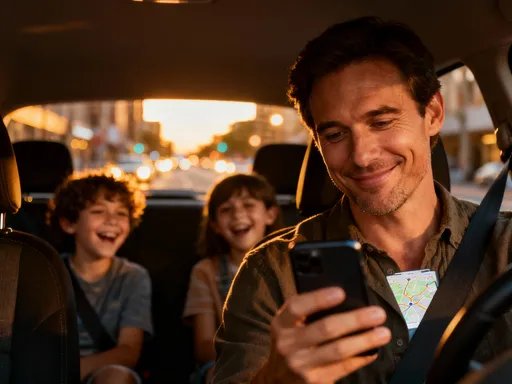
One of the biggest shifts has been the way it handles traffic. I used to dread highway commutes, especially during rush hour. Now, I don’t even check the news for traffic updates. My phone does it automatically. If there’s a backup, the app adjusts the route before I even notice. I’ll hear a soft chime: “Traffic is heavier than usual. Taking a different route.” And just like that, the stress lifts. I don’t have to make the decision. I don’t have to worry. I can just drive, listen to a podcast, or chat with my daughter in the backseat about her science project.
And it’s not just about avoiding jams. The app gives me something even more valuable: predictability. When I’m running late, I can glance at the screen and know exactly when I’ll arrive. That little ETA at the top of the screen? It’s become a lifeline. It helps me manage expectations—mine and others’. I can text my sister, “Running 8 minutes behind, but on my way,” instead of showing up flustered and apologizing. That small bit of control makes me feel more capable, more grounded. It’s not magic, but it feels close.
I’ve also noticed how much calmer I am behind the wheel. Without the constant mental chatter of “Am I going the right way?” or “Will I make it in time?”, I can actually be present. I catch myself humming along to songs, noticing the changing seasons on familiar streets, or just enjoying a quiet moment before the day truly begins. That peace isn’t something I expected from a piece of technology. But here it is—simple, steady, and always there.
Smarter Errands, Less Stress
Errands used to be the worst part of my week. Grocery shopping, picking up prescriptions, returning library books, dropping off donations—it all felt scattered, chaotic, and time-consuming. I’d make lists, but I’d still end up driving in circles, backtracking across town, or realizing I’d forgotten something important. By the end of a shopping day, I’d feel drained, not accomplished.
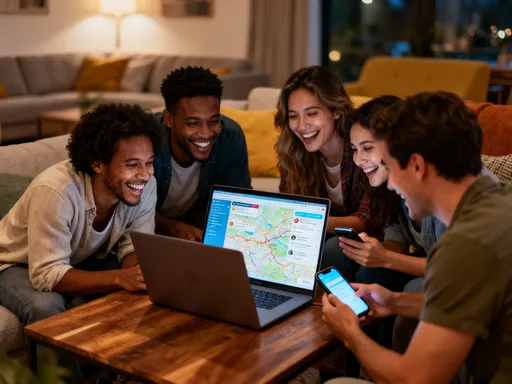
Now, I plan my errands differently. I open the map app and search for everything I need—grocery store, pharmacy, post office—and it shows me where they are in relation to each other. I can see at a glance which ones are close, which ones make sense to group together. I turn what used to be three separate trips into one smooth loop. I start at the far end of town and work my way back, hitting each stop in the most efficient order. It’s like solving a puzzle, but the app does the hard part for me.
The time savings are real. I’ve cut my weekly driving time for errands by nearly half. What used to take three hours now takes about 90 minutes. And it’s not just about speed—it’s about how it feels. I’m not rushing. I’m not stressed. I walk into each store with a clear purpose, get what I need, and move on. I even have time to grab a coffee at the little bakery near the post office, something I never would’ve done before because I was always in a hurry.
My kids have noticed the difference too. “Mom, we’re home already?” my youngest said last week after a full round of errands. I laughed. “Yes, because we didn’t drive all over creation.” She grinned. “I like the new way.” Neither of us realized how much the old way wore us down until we had a better one. Now, errands don’t feel like a chore. They feel manageable. And that small shift has made room for more joy, more rest, more of the things that matter.
Discovering Local Gems Without the Guesswork
For years, I stuck to the same few places—the grocery store I knew, the park near school, the coffee shop on my commute. I told myself it was practical. But the truth? I was afraid of getting lost. I didn’t want to waste time, I didn’t want to be late, and I didn’t want to feel foolish asking for directions. So I stayed in my bubble, missing out on so much without even knowing it.
Then I started letting the app guide me beyond the familiar. I’d see a little icon pop up—“Coffee Shop • 0.3 miles” or “Pet-Friendly Park • 5 min away”—and I’d think, “Why not?” I began saying yes to those small invitations. I tried a new bakery on a Saturday morning. I found a quiet trail behind the library where we could walk the dog without crowds. I discovered a family-owned bookstore that hosts weekend story hours for kids.
These aren’t grand adventures, but they’ve added so much warmth to our lives. That bookstore? It’s now our favorite Saturday stop. The kids pick out one book each, and I grab a novel for myself. We sit on the floor and read together before heading home. The park with the trail? We’ve had picnics there, seen deer at dawn, and even watched a family of rabbits cross the path. These moments wouldn’t have happened if I’d been too afraid to take a different route.
The app doesn’t just show me how to get somewhere—it shows me where to go. It suggests places based on what others like, what’s nearby, what’s highly rated. It’s like having a friend who knows the area well and says, “You’ve got to try this.” And because I trust the route, I can trust the recommendation. I’m not risking being late or lost. I’m just exploring, with confidence. That freedom to wander a little, to discover something new, has made my days feel richer, more alive.
Helping My Family Move with Confidence
It’s not just me who benefits. My family does too. When my oldest started driving, I was nervous—understandably so. The first few times he took the car alone, I hovered by the window, checking the clock. Then I realized I could share his location through the app. Not to watch him every second, but so I’d know he’d arrived safely. He agreed, and it made a big difference for both of us. He felt trusted. I felt at ease.
Now, when he drives to a friend’s house or heads to practice, I can see his progress on the map. If traffic is bad, I know why he’s late. If he takes a different route, I don’t panic—I just see the new path. And when he arrives, a little note pops up: “Arrived at destination.” That small update brings such relief. It’s not about control. It’s about connection. It’s about knowing he’s okay.
I’ve also used the app to help my parents when they visit. They’re not as comfortable with technology, and navigating a new city can be overwhelming. So I plan their routes in advance, send them links, and even share real-time directions when they’re out exploring. Last summer, they wanted to visit a botanical garden on the other side of town. I set up the route, sent it to their phone, and checked in when they arrived. “We found it no problem!” my mom said, laughing. “Your little map made us feel like locals.”
That moment meant more than just a successful trip. It meant they felt independent. It meant I could care for them without hovering. The app became a bridge—between generations, between worries and peace. It didn’t replace our relationship. It strengthened it, by giving us one less thing to worry about.
How I Use Map Apps Beyond Driving
I used to think of map apps as car tools. But I’ve learned they’re so much more. When I visit a new city, I don’t rent a car. I walk. And the app guides me every step of the way. I type in “coffee near me,” and it shows walking directions, complete with street views so I know exactly what to look for. I’ve found cozy cafés in Lisbon, quiet gardens in Kyoto, and hidden bookshops in Edinburgh—all on foot, all without stress.
It’s the same with public transit. When I traveled to Chicago last winter, I had no idea how the bus and train system worked. But the app did. I typed in my destination, and it gave me step-by-step instructions: “Walk 2 minutes to Clark St stop. Take Bus #22 northbound. Transfer at Fullerton. Arrive in 28 minutes.” It even showed real-time arrival times for buses. I followed along, and it worked perfectly. I felt independent, capable, and curious—like a real traveler, not a tourist who’s lost.
Back home, I use it for walking routes too. I’ve discovered new trails in the park, found the shortest path to the community center, and even mapped out a scenic route for my daily walks. The app adjusts to how I move—driving, walking, biking, taking the bus. It doesn’t force me into one way of living. It adapts to mine. That flexibility has made me more adventurous, more willing to try new things, because I know I won’t get stuck.
And it’s not just for me. My daughter uses it for her bike rides. She plans her own routes to her friend’s house, checks how long it will take, and shares her location with me while she’s out. She feels grown-up. I feel safe. It’s a win for both of us. The app isn’t replacing our conversations or our care for each other. It’s making space for more freedom, more trust, more growth.
Small Tech, Big Calm: What I’ve Gained
Looking back, I realize the biggest gift map apps have given me isn’t saved time or shorter routes. It’s peace. It’s the quiet confidence that I can handle whatever the day throws at me. I don’t have to be perfect. I don’t have to know every street. I just have to trust the tool in my pocket. And in that trust, I’ve found more room to breathe, to listen, to be present.
I used to think being a good mom, a good wife, a good daughter meant carrying all the responsibility myself. I thought I had to be the one who knew the way, who planned every detail, who kept everything running smoothly. But I’ve learned that asking for help—even from technology—doesn’t make me weak. It makes me wise. It means I’m using every resource available to create a calmer, kinder life for myself and my family.
The app hasn’t changed who I am. But it has changed how I move through the world. I’m less reactive. Less anxious. More open to spontaneity. I say yes to last-minute plans because I know I can find my way. I explore new neighborhoods because I’m not afraid to get lost. I arrive places with a smile, not an excuse. And that shift—small as it may seem—has made all the difference.
In a world that often feels too fast, too loud, too much, this little tool has given me something rare: simplicity. It doesn’t solve everything. But it handles one thing really well, and in doing so, it frees me to focus on what truly matters—my family, my time, my peace of mind. And honestly? That’s more than enough.